
Rhonda — How ADHD Strategies Helped Calm Her Nervous System
Client Background
Rhonda is a professional coach who joined the Flourishing with ADHD Seminar, a six-week group coaching experience. Although she has never received a formal ADHD diagnosis, she had long recognized challenges with staying on task, procrastination, and impulsivity.
As the seminar progressed, Rhonda began to recognize how many of the ADHD patterns they were exploring reflected her own experience. She came away believing that she likely has ADHD and, more importantly, with a new understanding of how living without strategies that worked for her brain had affected far more than her productivity.
The Challenge
Before the seminar, Rhonda often felt as though her central nervous system was “on fire.”
She was navigating procrastination, impulsivity, difficulty staying focused, and the anxiety that came with continually trying to manage those challenges without understanding what was happening or having strategies that worked for her.
What she had previously experienced as separate struggles began to look different once she understood them through the lens of ADHD. She could see how frequently she was being pushed into a heightened state of stress and overwhelm.
Her relationships were also affected. Her son had been diagnosed with ADHD, but Rhonda felt there were missed connections between them. Although she knew about his diagnosis, she did not fully understand how significantly ADHD could affect daily life, emotional regulation, and relationships.
The Coaching Process
Over six weeks of group coaching, Rhonda learned more about how ADHD can influence everyday life while reflecting on how those patterns showed up for both herself and her son. Rather than simply learning about ADHD, she began experimenting with practical strategies for working with her brain differently.
One of the most significant was the Solve-It Grid, a tool from Your Brain’s Not Broken. The grid helped Rhonda recognize when she was moving toward the “red zone” and identify what she needed to focus on rather than being pulled along by procrastination, impulsivity, or overwhelm.
The group itself was also an important part of the experience. Rhonda was surprised by the vulnerability participants brought to the conversations and how quickly the group developed a sense of acceptance, support, and connection. Learning alongside others gave her practical ideas and reassurance that she was not alone in many of the challenges she experienced.
Turning Point or Insight
Rhonda’s biggest realization was the connection between ADHD and the state of her nervous system.
Without strategies that supported the way her brain worked, she had frequently operated in a state of heightened stress. Once she began understanding her patterns and using tools to respond to them, she noticed something significant: her nervous system was calmer.
She experienced less anxiety and fewer times when she found herself in the “red zone.”
The shift was not about eliminating ADHD-related challenges. It was about having enough awareness and practical strategies that those challenges no longer created the same level of internal chaos.
That awareness also changed the way Rhonda understood her son. Recognizing similar patterns in herself gave them a shared language for talking about their experiences and helped remove a barrier that had existed between them.
The Outcome
Rhonda now feels calmer and more grounded in her daily life. She has strategies she can use when procrastination, impulsivity, or overwhelm begin to take over, and she notices fewer episodes of reaching the heightened “red zone” she experienced before.
That increased regulation has affected more than her ability to get things done. It has reduced her anxiety and changed the way she experiences herself.
Her relationship with her son has also become more authentic, connected, and supportive. They can talk openly about how ADHD shows up in their lives and consider how to work with their brains rather than continually fighting against them.
As a professional coach, Rhonda has also found herself sharing what she learned with others and recognizing how quickly these conversations can create connection with people who have experienced similar challenges.
For Rhonda, understanding ADHD provided more than an explanation. It gave her practical ways to respond, and those strategies created greater calm, capacity, and connection.
In Her Words
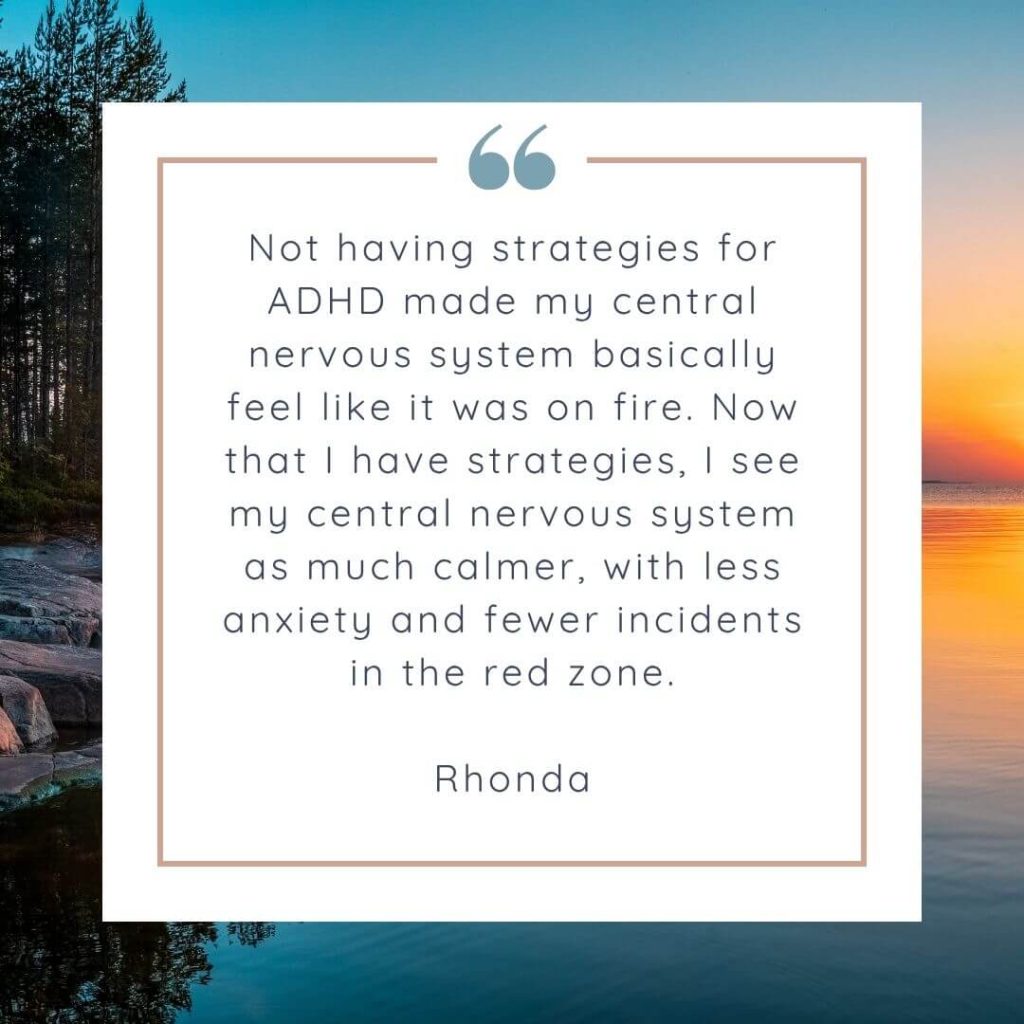
“Not having strategies for ADHD made my central nervous system basically feel like it was on fire. Now that I have strategies, I see my central nervous system as much calmer, with less anxiety and fewer incidents in the red zone.”
What Could Change If You Had Strategies That Worked With Your Brain?
Understanding ADHD is about more than explaining why certain things feel hard. The right strategies can reduce overwhelm, create more capacity, and help you move through your days with greater calm and confidence.
Flourishing with ADHD is a six-week group coaching experience designed to help you better understand how ADHD shows up in your life and develop practical strategies to work with your brain rather than constantly fighting it.
If you’re ready to experience more awareness, more effective strategies, and less time in the red zone, learn more about Flourishing with ADHD.